The CIPR is steeped in history, but 2025 has been yet another important year, putting in place the final elements of our current, member approved, modernisation programme, with the appointment of an Independent Chair. I was honoured to be appointed to that position in January. Being an Independent Chair means I am not a PR industry person. My professional background is in advertising, marketing, Whitehall and Westminster; I am not a PR expert, but I know the importance of effective public relations.
The CIPR is, quite simply, unique with its strength in its broad membership base, providing an army of expert volunteers, sharing their skills and experiences for the benefit of the profession. Being a CIPR member is a sign of commitment to quality and professionalism. The Board’s challenge, working with the Council, is how we support this exceptional talent base, to best meet our Charter obligations, now and into the future, for the benefit of members, and society as a whole.
To be able to deliver our Charter principles the organisation needs sound finances to pay the bills. In 2025 the Board’s prime focus was to delivery the agreed 2025 budget, without the need for in year budget cuts. That ambition was, all but, achieved, after a number of years of unsettling financial instability. My thanks go to our CEO and the whole team who have been assiduous in helping the Board to remain focussed on the agreed plan (and not to allow new priorities to creep in!). The HeadQuarters Team of 34 people support more than 10 000 members, with a growing number of Corporate Members. My thanks go to each and every one of the CIPR Team who have worked so diligently this year.
Whilst our Charter stays the same, our strategy evolves over time. In 2029 we will publish a renewed strategy. Work on that will get underway towards the end of this year and I hope as many members as possible will be able to get involved.
With increasing awareness of the harm caused by fake news and disinformation, the role of the Chartered Institute of Public Relations has never been more important. Upholding the principles of our Charter are essential for the Public Relations Sector to thrive. My final thanks are reserved for Advita Patel, for her industry leadership as President in 2025, and for all that she has done (and continues to do), to ensure the CIPR and the sector addresses diversity and inclusion. She has been an inspiration for me and the whole Board over the year.
Rt Hon Dame Maria Miller.
Independent Chair of the Board

When I was elected as CIPR President, I wanted to bring positive disruption and champion a profession where everyone can belong. Looking back on 2025, I am proud of how far we have come together and honest about how much further we still need to go.
This has been a year in which the world reminded us, again and again, why professional public relations matters. A global trade war reshaped economic certainties. Artificial intelligence moved from experiment to everyday tool, bringing extraordinary capability and risk in equal measure. Misinformation became harder to spot and easier to spread. And closer to home, a new UK government began rewriting the policy landscape, creating both new opportunities and fresh challenges for communicators across every sector.
In that environment, trust is everything. Practitioners who can cut through noise, confidently hold their nerve in a crisis, and communicate with integrity are essential.
AI proved inescapable in 2025 and we chose to lead rather than react. We signed the Venice Pledge, committing to responsible AI principles alongside more than 20 PR bodies worldwide. Our volunteers delivered ten AI-focused events drawing more than 1,100 attendees, equipping practitioners with the practical knowledge to use these tools ethically and effectively - to understand them, question them, and be accountable for how they are used.
We set a new record for Chartership, our on-demand learning platform grew from 15 modules to more than 50, and just under 3,000 members completed their CPD cycle, logging over 200,000 activities.
As the first person of colour to serve as CIPR President, I do not take any of this for granted. Representation matters but only if it translates into meaningful, lasting change. The data tells us that we still have work to do before our profession truly represents the publics we serve. And I am determined that the CIPR continues to confront those realities with intentional effort and action.
None of what we achieved in 2025 would have been possible without our extraordinary community. More than 450 volunteers delivered nearly 200 events and generated more than 10,000 registrations across the year. Thank you all for your incredible commitment and support. The CIPR wouldn’t exist without you.
Advita Patel Chart.PR, Hon FCIPR
2025 President, Chartered Institute of Public Relations

I am pleased to report a year of strong financial progress for the CIPR. In 2025, we delivered a modest surplus for the first time in several years - an important milestone driven by disciplined financial management, improved operational efficiencies and early progress towards diversifying income streams, including a growing focus on corporate membership engagement.
More importantly, this outcome marks the beginning of a more resilient and sustainable financial approach for the CIPR at a time of significant change across the profession and wider society. Ongoing global conflicts, economic uncertainty and evolving member expectations continue to reshape the environment in which professional bodies operate. Against this backdrop, the Board remains firmly committed to delivering long-term financial sustainability and ensuring the CIPR is well positioned for the future.
To support this next phase, in 2025 the Board commissioned an independent finance review by HaysMac focused on strengthening CIPR’s financial governance, operational effectiveness and long-term planning capability. The review examined key financial processes, controls and organisational structures, identifying opportunities to improve efficiency, oversight and reporting. The Senior Leadership Team has implemented its recommendations and, building on this work, we appointed a fractional Finance Director in 2026 to provide strategic financial oversight and help embed greater financial maturity across the organisation.
Together, these steps demonstrate a clear commitment to responsible stewardship, transparency and building a financially sustainable organisation that can continue to champion and strengthen the profession for years to come.
Noha Al Afifi MCIPR
Board member and Honorary Treasurer

2025 was the first year of our new five-year strategy, built to equip PR professionals around the world to make a positive difference in business and society.
Our Royal Charter defines our purpose. To clearly express this purpose and ensure it guides everything we do, we have laid out four key strategic priorities to carry us to 2029 around which this report is structured.
Making chartership the norm Continue to advance our journey towards becoming a predominantly chartered profession and increase the presence and influence of PR professionals on boards.
Supporting members to adapt and evolve We will ensure our members can maintain a competitive advantage by increasing knowledge and understanding of artificial intelligence within public relations and supporting practitioners to adopt AI effectively and ethically.
Ensuring PR is valued and understood We will act as the voice of the PR industry, speaking to government, other professions, and partners to promote the value of professional PR. We will serve as a trusted advocate for responsible communications, ensuring CIPR members are seen as on a par with other professionals.
Creating a community where everyone can belong We are serious about creating an equitable PR profession where there are no barriers to entry and practitioners from all backgrounds can thrive and succeed. We will continuously raise awareness, educate and foster a culture of inclusion and belonging within our community. We value a staff culture in which people can develop and actively contribute as members of the CIPR community.
Our five-year strategy commits us to making Chartership the norm and to growing a profession built on lifelong learning. Throughout 2025, we translated that into a concrete set of priorities: expanding the on-demand learning platform so members can study wherever they are, completing an in-depth review of every CIPR professional qualification, and broadening access to the industry through new routes into the profession, in recognition the pipeline of practitioners is as important as developing those already in it. The work that followed reflects each of these ambitions.
Lifelong learning sits at the heart of CIPR membership, and in 2025 members embraced it in record numbers.
2025 marked a new record for members achieving Chartered PR Practitioner status, with 178 earning the industry’s highest badge of professionalism.
Congratulations to all our members who became Chartered in 2025.
Find out more about Chartership
We partnered with the JGA Group to strengthen public relations and communications apprenticeships across the UK, opening a new route into the profession and giving employers a more reliable way to build their pipelines.
JGA's PR and communications apprenticeships are rated Outstanding by Ofsted, and 74% of its apprentices achieve a distinction. The model pairs paid employment with formal training. Under the partnership, JGA apprentices joining via the CIPR receive two years of free student membership. Employers, meanwhile, can draw on the Apprenticeship Levy or - for smaller organisations - a 95% government subsidy to cover training costs, making the scheme a practical option for widening access to the profession.
Learn more about our partnership with JGA
_CIPR_Internship_Guidance_Toolkit_Email_1200x600_v1_01.jpg)
In May, we published our newly updated Internship and Work Placement Toolkit to help employers looking to create work placements that are meaningful, fair, and set their people up for success.
The toolkit covers the full internship lifecycle, from recruitment and onboarding through to supervision and career development, and is filled with practical guidance to help organisations stand out as employers of choice, while championing fair payment, diversity, and social mobility.
In November we published Everyday Ethics in PR Volume II, the second collection of case studies designed to help members work through the kinds of ethical dilemmas that arise in day-to-day practice.
The volume features seven anonymised cases drawn from enquiries to the CIPR's Ethics Hotline, written by our Professional Practice and Ethics Consultant, Chris Lines Chart.PR. Each one sets out a real situation faced by a practitioner, alongside considerations and advice on how to approach it. The cases span evolving media relationships, conflicts of interest, political engagement and questions of transparency.
The guide invites members to reflect on how they would respond in similar circumstances, building the confidence to recognise and address ethical challenges before they escalate. It is free to download for members, worth five CPD points, and fulfils the annual requirement to log five ethics points.
Leading practice means equipping our members with the insight, guidance, and evidence they need to stay ahead. In 2025, that ambition ran through everything we accomplished, from landmark research and new best-practice guides to the Excellence Awards and volunteer-led events. Together, this work reflects a profession confidently navigating change, and a CIPR committed to supporting members through it.

In December, we published the first-ever analysis of UK-wide ONS census data relating to PR professionals. The PR Population Report: UK-wide edition was built on the February 2024 report of the same title, incorporating newly released datasets on PR professionals working and residing in Northern Ireland and Scotland in addition to existing data from practitioners England and Wales.
The analysis revealed:
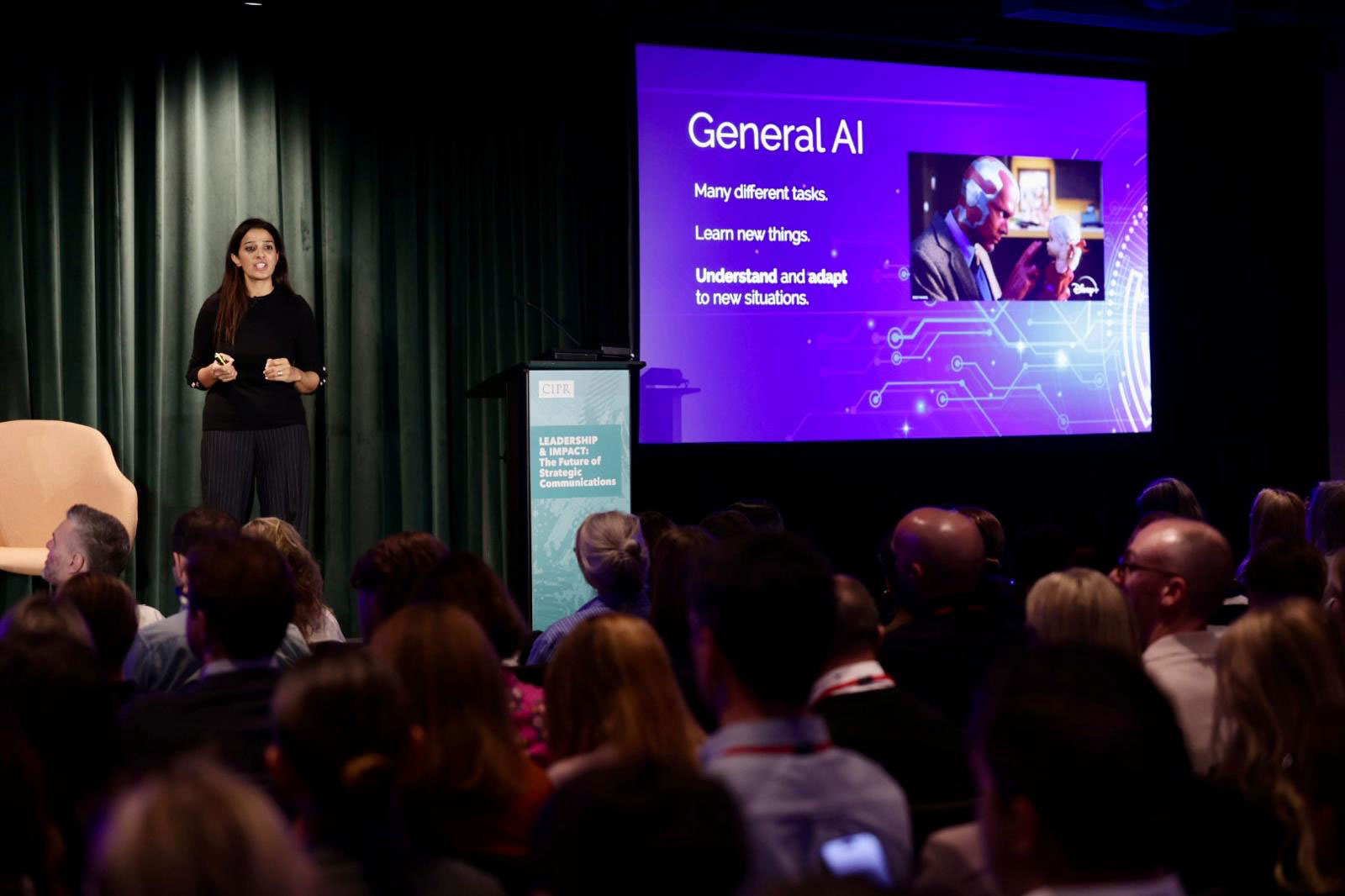
Over 300 public relations and communications professionals gathered at the Minster Building in London in July for our annual conference exploring how the profession is redefining leadership in the modern business landscape. Sponsored by Agility PR Solutions, PA mediapoint, Cision, and Specialist Speakers, the 'Leadership and Impact' conference examined the challenges and opportunities facing PR professionals at the highest levels of business, from navigating intergenerational workplace dynamics to understanding AI's transformative potential.
The event hosted an array of expert speakers including James Peach (business leader in tech, retail and FMCG), Priya Lakhani OBE (Founder and CEO of Century Tech), Dr Jack Lewis (neuroscientist and TV presenter), and Karen Blackett CBE (former WPP UK President), who closed the day with reflections on the importance of authenticity, empathy, and the ability to motivate diverse teams as essential ingredients of successful leadership.
Learn more about Leadership & Impact
In August, in partnership with Opinium, we launched a survey that revealed a groundswell in lobbyist engagement with Reform UK, with 20% of PR professional's planning to attend the party's September conference.
The findings were covered in the Independent and syndicated extensively throughout national and regional press.
"As artificial intelligence continues to transform our profession, it's crucial that we establish robust ethical frameworks for its use. By signing the Venice Pledge, this group of global bodies demonstrate our commitment to ensuring AI enhances rather than compromises the integrity of public relations practice. We're dedicated to helping our members navigate these technologies effectively whilst adhering to the highest professional standards."
CIPR CEO, Alastair McCapra
In May, we signed the Venice Pledge, affirming our commitment to embedding responsible artificial intelligence (AI) practices across the public relations profession.
Developed by the Global Alliance for Public Relations and Communication Management and co-signed by more than 20 public relations bodies worldwide, the Pledge sets out seven Responsible AI Guiding Principles, providing a shared framework for the ethical, transparent, and human-centred application of AI in PR.
The Principles emphasise that AI should support, not replace, human judgment and creativity whilst ensuring accountability, fairness, and accuracy in professional practice.
Learn more about the Venice Pledge
"The awards ceremony was a true celebration of the exceptional talent within the PR industry [and] demonstrated the remarkable impact that effective, ethical, and innovative public relations can have on businesses, clients, and society. In these times, when clear, creative, and impactful communication is more important than ever, it's inspiring to see such dedication and expertise to this craft."
CIPR President Advita Patel Chart.PR Hon FCIPR
More than 400 public relations and communications professionals joined host Ben Hanlin at the Royal Lancaster London for the 41st CIPR Excellence Awards to celebrate the most outstanding work in PR over the previous 12 months.
The evening saw 125 organisations and professionals compete across 30 categories – comprised of six individual and team awards and 24 campaign categories.
AI dominated the volunteer events programme in 2025. Ten events across eight volunteer groups drew more than 1,100 attendees, as practitioners moved beyond the hype to examine what AI means for the profession in practice.
The Greater London Group convened a flagship session on the past, present and future of AI in PR. Drawing on founders with experience leading AI startups, they cut through the noise to address how today's tools differ from those we've used for years, what they mean for everyday practice, and how practitioners at every career stage can get ahead.
The STEM Group tackled a challenge every communicator recognises: how to talk credibly about AI without a technical background. Their session equipped members with the language to bridge the gap between technical expertise and wider audiences.
The Construction and Property Special Interest Group (CAPSIG) showed AI's reach beyond the tech sector, with speakers detailing how a housing association's comms team is putting AI to work in practice.
From Scotland to the Midlands, the Channel Islands and the Health Group, further events explored AI-powered content creation and the ethical questions practitioners cannot afford to ignore.
The level of engagement reflects how seriously the profession is taking AI, and the role CIPR volunteers are playing in shaping that conversation.
In February, we published updated versions of our E, S and G guides, reflecting the significant changes since the original versions’ publication in 2024.
The three-part series was extensively revised to incorporate evolving best practice and the latest understandings of new regulatory frameworks and emerging trends. They examine AI’s role in ESG reporting, the concept of a ‘just transition’, recent legislative developments such as the UK’s new Procurement Act, and more.
Download our updated ESG guides
In December, we published a new skills guide to help organisations protect their people, maintain trust, and support recovery through effective internal crisis communication.
Developed by crisis communication specialist Alison Arnot Chart.PR, FCIPR, the guide - Internal Crisis Communication - provides practical advice for communicating with internal stakeholders before, during and after a crisis. It introduces a seven-stage model to help communicators meet evolving human and organisational needs from the first moments of a crisis through to long-term recovery.
Download internal crisis communication
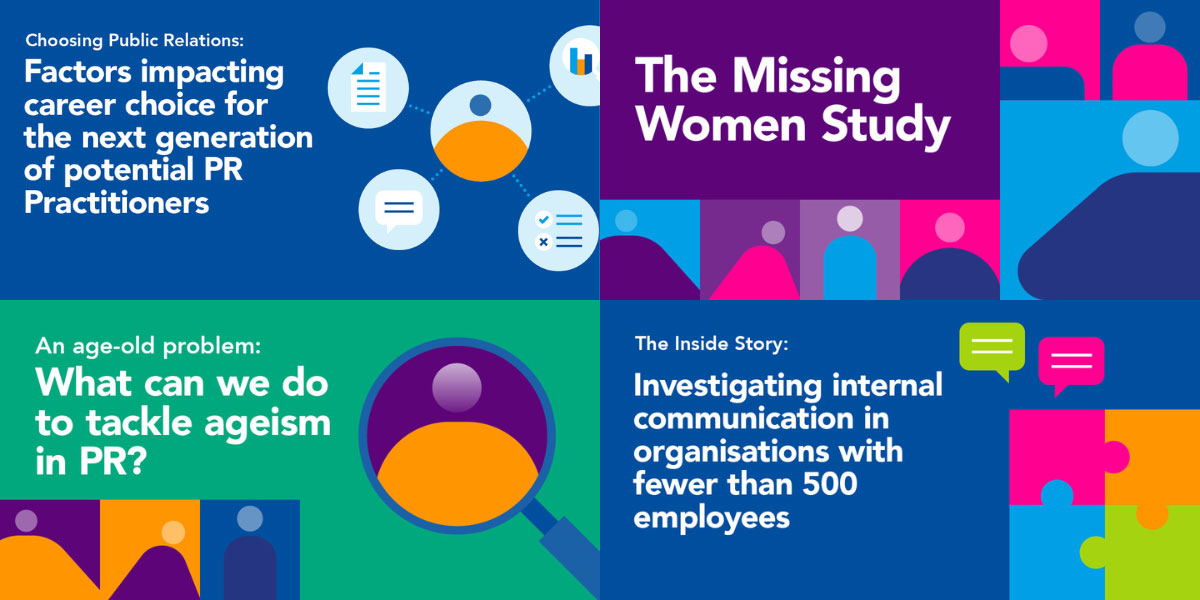
The CIPR Research Fund continued to support independent research into the PR profession, with four studies published throughout 2025.
Authored by Rana Audah, Ben Verinder, Josie Shepherd, Sarah Waddington CBE, Stephen Waddington and Isobel Wilson-Cleary, this study examines the shortfall of nearly 4,000 female PR practitioners who have either left the industry mid-career or failed to advance to senior positions. The research unpacks the interconnected barriers holding women back and provides solutions to improve gender equality in the profession.
Authored by Jenny Manchester MCIPR, this study explores the lived experiences of ageism among PR professionals through 44 semi-structured interviews. The research reveals that older professionals face systematic barriers and cultural biases that favour youth over experience and provides a practical checklist for organisations.
Authored by John Clegg Chart.PR, FCIPR, this report analyses the recurring themes shaping internal communication practice in smaller organisations. A companion skills guide provides practical advice for establishing effective internal communication.
Authored by Caroline Spence MCIPR, this report examines the factors influencing career choice for students and recent graduates considering PR. Based on a survey of over 110 participants across 12 UK universities, it highlights the critical role of direct access to industry professionals and paid work experience.
Our Engage Podcast Editorial Board delivered three episodes in 2025, each tackling issues at the heart of contemporary practice:
Guests included the UN Under-Secretary-General for Global Communication, behavioural scientists, charity executives, content creators, and consultants, exploring everything from the erosion of trust in institutions to cognitive bias in organisational decision-making.
Our advocacy work in 2025 ran across two tracks. On lobbying, we continued our campaign to bring about reform of the 2014 Lobbying Act. On business engagement, our work plan set out a sustained programme of media activity to put the case for professional public relations in front of decision-makers in business, government, and trade press.
The CIPR was quoted across national press and broadcast throughout 2025, with spokespeople contributing to debate on lobbying reform, AI regulation, diversity and inclusion, and the value of professional public relations.
Across 2025, we achieved:

"After many months of making the case for lobbying reform, we are encouraged by the positive engagement from both government and across Parliament. We understand the immediate challenges facing the government, but will continue to make the case that lobbying reform will deliver real benefits for businesses, parliamentarians, and the UK’s international reputation."
CIPR CEO, Alastair McCapra
In April, we published No Rules Britannia?, a comparative study of lobbying regulations across nine jurisdictions worldwide. The research exposed large gaps in the UK's lobbying regulations and laid bare the limitations of Westminster's public register, which was introduced more than a decade ago to increase lobbying transparency.
The report found that Westminster's lobbying register has the fewest lobbyists recorded of any regime analysed, even when adjusted for population, and is the least transparent about what constitutes lobbying - capturing only consultant lobbyists who make up a small percentage of the industry.
The research also highlighted that the Office of the Registrar of Consultant Lobbyists (ORCL) has among the weakest enforcement powers available, with no authority to bar lobbyists from accessing government agencies, buildings, or staff, and the second smallest maximum financial penalties of the jurisdictions studied.
The report calls for all lobbying activity to be registered, for the scope of those lobbied to be expanded to include special advisers and senior civil servants, and for ORCL to be reconstituted as a broader Office of the Registrar of Lobbying with enhanced powers.
We launched the report with a Parliamentary roundtable event and were pleased to see it quoted in the House of Lords by Baroness Bennett.
Our Lobbying for Good Lobbying campaign continued to make progress in 2025 as we engaged directly with government to press for reform of Westminster's lobbying laws.
In November, CIPR CEO Alastair McCapra and Head of PR and Policy Jon Gerlis met with Cabinet Office Spokesperson Baroness Anderson of Stoke-on-Trent and Labour Peer Baroness Hayter to outline the case for expanding the lobbying register beyond consultant lobbyists. We also met with the newly appointed chair of the Ethics and Integrity Commission, Doug Chalmers, the newly appointed Registrar of Consultant Lobbyists, Claire Bassett, and were invited to attend the launch of the government’s anti-corruption strategy.
The 2024 general election reshaped the UK's political landscape, and throughout 2025 our volunteer-led groups moved quickly to equip members with the skills and insight needed to navigate it.
With the new government's commitment to devolution creating fresh opportunities and challenges for public affairs practitioners, our Public Affairs Group brought together a panel of experts to explore how to influence Metro Mayors effectively. For many practitioners, the shift from Westminster-focused strategies to engaging Combined Authorities represents new territory, and over 100 members attended to understand how regional power structures are evolving.
In Wales, where devolved and reserved powers create a particularly complex environment for public affairs work, CIPR Cymru hosted The Open University to share how they have cultivated meaningful relationships with policymakers over several years. Their experience demonstrated the value of patience and perseverance in building influence, particularly for organisations that may feel like "part of the furniture" but still need to make their voice heard.
Across these events, our groups consistently provided members with the tools to put principles into practice.
2025 combined new initiatives with continuing work. We set out to launch the profession's first neuroinclusion for managers training, deepen our partnership with the Taylor Bennett Foundation through a fourth year of the award-winning Reverse Mentoring Scheme, and invest in volunteer-led work to open up more routes into PR careers.
Through medals, Fellowships, and partnerships, we also recognised the people whose work makes our profession more inclusive, more ambitious, and better equipped for the years ahead.
Over the course of 2025:
In November, we launched the profession's first ever neuroinclusion training course for public relations managers.
Running over a single day, 'Neuroinclusion for Managers' gives PR leaders evidence-based insights and practical tools to create neuroinclusive teams, navigate disclosure conversations and reasonable adjustments, and harness the strengths neurodivergent colleagues bring to strategic thinking and creative problem-solving. The aim is to build psychologically safe environments where different working styles are recognised, valued, and put to work.
We paired the launch with a new Neuroinclusion in PR LinkedIn Group, giving neurodivergent professionals and allies a space to connect, share experiences, and help shape what good practice looks like across the industry.
Find out more about the course
Our volunteer team drove growing engagement across our networks and communities.
In 2025 our volunteers delivered 189 events, offering a combined 946 CPD points, and achieved a total of 10,379 registrations, demonstrating strong and sustained member demand for our learning and development offer.
We successfully launched the new online volunteer induction programme for our 450+ volunteers, achieving a completion rate of over 50% in its first year.
In 2025, seven regional and sector groups came together for the first time to launch Re:Work, a series of free, expert-led webinars for members facing a career crossroads. From redundancy support to AI-powered job searching, volunteers designed a programme that gave practitioners practical help exactly when they needed it. The series continues into 2026 with further sessions on freelancing, career transitions, and making the most of CIPR membership.
Watch the recordings and find upcoming sessions
Attracting new talent into the profession is one of the biggest challenges our industry faces. In 2025, a cross-CIPR volunteer working group led by Catherine Condie Chart.PR, FCIPR set out to make the journey into PR more accessible, inclusive, and visible.
Building on our Careers in PR Hub, the group began developing a modular learning pack covering the fundamentals of PR, ethics, digital skills, and AI, and encouraging CIPR branches to partner with schools, colleges, and universities to put PR on the map as a career choice.
Read more about the Careers in PR Group
Four regional conferences in 2025 brought several hundred practitioners together and put the profession's most pressing questions on the agenda. Programmes set independently by volunteer committees converged on a recognisable set of themes addressing the integrity of the information environment, the practical reality of AI in daily work, and the changing shape of the profession itself.
CIPR East Anglia took on the question of trust head-on, themed around how communicators navigate misinformation and information integrity in the digital age. Keynote speaker Shayoni Lynn FCIPR, CEO and Founder of Lynn Group, brought a global perspective on how influence campaigns are evolving and how practitioners can respond.
Sessions grounded the theme in lived professional experience, with Robin Punt of Essex Police on policing communications, Sarah Roberts Chart.PR, FCIPR of Cambridge University Hospitals NHS Foundation Trust on healthcare misinformation, Athena Dinar Chart.PR, MCIPR of the British Antarctic Survey on research communications, Richard Bagnall Hon FCIPR on demonstrating value in uncertain times, and Bedford Independent co-founder Paul Hutchinson on tackling disinformation from the journalist's side of the desk.
The Midlands PR Conference returned under the theme Future Focused: The Evolution of PR, drawing close to 200 practitioners from across the region. BBC Technology Editor Zoe Kleinman delivered the keynote on how big tech is reshaping the media landscape, Sheeraz Gulsher of People Like Us and Mel Rodrigues of Creative Access discussed building and retaining diverse teams, Joss Freestone of Eulogy spoke about the convergence of paid and earned media, and broadcaster Nikki Dean shared her thoughts on public speaking. A choice of nine breakout sessions covered visual storytelling, podcasting, crisis response, public affairs, leadership, and allyship.
CIPR South West held its first conference in ten years, gathering members in Cheltenham for a day of learning and reconnection. Amanda Coleman opened with a session on crisis communications, followed by Andrew Bruce Smith on practical applications of AI in PR practice. Rachel Braier delivered the keynote on celebrity and influencer engagement, and the day closed with a panel of working journalists on what the media is looking for from PR practitioners in 2025 and beyond.
CIPR Cymru's Communicating for Tomorrow conference examined how the profession is adapting to a wider set of pressures at once: new technologies that are helping and hindering practitioners in equal measure, the continued rise of misinformation, the growing weight of ESG in the communicator's brief, and the broader question of what it now means to do this job well. Speakers from across Wales and the wider UK shared perspectives drawn from their own corners of the profession.

The 2025 Sir Stephen Tallents' Medal was awarded to Anne-Marie Lacey, Founder of Filament PR. Anne-Marie is a CIPR Fellow, sits on the Institute's Board of Directors, and serves as a Senior Lecturer in Public Relations at Newcastle University. Her distinguished career includes winning the Outstanding Young Communicator Award at the 2014 CIPR North East PRide Awards before winning the accolade nationally at the Excellence Awards in 2017. In awarding the Medal, President Advita Patel noted Anne-Marie's "commitment and dedication to the CIPR and advocacy for professionalism, Chartership, and qualifications", praising her recent work on the CIPR's syllabus review.
Sheeraz Gulsher, Co-founder of People Like Us, was awarded the 2025 President's Medal in recognition of his work championing diversity and inclusion within the PR industry. Through People Like Us - an award-winning not-for-profit supporting UK professionals from Black, Asian, Mixed Race, and minoritised ethnic backgrounds - Sheeraz has established a reputation for amplifying under-represented voices within and beyond the industry. President Advita Patel highlighted his "incredible work", noting that his campaigns have made "significant contributions both politically and within the industry itself".
Learn more about the recipients
In October, we awarded Honorary Fellowship to Dr Kevin Ruck in recognition of his exceptional contribution to the field of internal communication and the development of the public relations profession.
Kevin began his career at BT where he developed his expertise in internal communications and employee engagement. He went on to establish the PR Academy and initiated the CIPR's internal communications certificate and diploma courses. He is editor and co-author of the textbook Exploring Internal Communication, leads the European Affiliate Group of the Internal Communication Research Hub, and is a former Chair of the CIPR Inside Group.
Throughout 2025, we awarded Fellowship to 14 practitioners for their outstanding contribution to the profession and the Institute. As ambassadors for the CIPR, Fellows drive forward our values of a commitment to lifelong learning, professionalism, and ethical practice.
"Real change requires real, and sometimes difficult, conversations – and that’s what this scheme delivers. It’s not always easy, but the results speak for themselves. We’ve seen organisations begin to rethink recruitment and progression through this process. That’s the kind of impact we need to sustain to build a diverse industry that can succeed in this era of constant change and challenge."
Avril Lee MCIPR, Chair of the CIPR Diversity and Inclusion Forum
Our award-winning Reverse Mentoring Scheme, delivered in partnership with the Taylor Bennett Foundation, entered its fourth year in 2025 with 50% growth in participation. The scheme pairs senior leaders with PR professionals from Black, Asian and ethnic minority backgrounds to spark candid conversations, challenge bias, and drive cultural change.
This year's cohort brought together leaders from BT, Virgin Money, Freuds, and MONY Group, and the programme earned a Highly Commended at the PRWeek UK Awards - recognised for its growing impact on diversity at senior levels.
The CIPR was saddened to mark the passing of Tim Traverse-Healy OBE, a founding member of the Institute of Public Relations, at the age of 102.
Traverse-Healy was among the group of practitioners who founded the IPR (now CIPR) in 1948, serving as its first recruitment secretary and later as President (1967–68). His influence extended far beyond the UK: he was a founding council member and president of the International Public Relations Association, vice-president of the European PR federation (CERP), and was elected to the USA's Arthur Page Society Hall of Fame.
A respected consultant and academic, he held a professorship at Stirling University and was a visiting lecturer at institutions across the UK and USA. Throughout his career, he championed the ethical foundations of public relations practice, publishing extensively on codes of conduct and professional standards.
His 2014 'Credo for PR' encapsulated a lifetime's commitment to responsible practice:
"In the overall scheme of things the objective of our contribution to society at large is the achievement of a balance between the intentions of the institutions we represent and the legitimate concerns of their community and constituency."
Tim Traverse-Healy's legacy is woven into the very fabric of the CIPR and the global PR profession.
We retained our Carbon Neutral status in 2025, continuing our partnership with Carbon Neutral Britain (CNB). Our 2025 footprint assessment recorded 381.81 tonnes of carbon dioxide equivalent, unchanged from 2024, which we offset in full through CNB's Climate Fund.
As a fully remote organisation, most of our footprint comes from the goods and services we buy to deliver training, events, and professional development to our 11,580 members worldwide. We offset these emissions through verified carbon credits, in line with our commitment to environmental responsibility.
Our audited accounts for 2025 were issued in June 2026.
| Type | 2025 | 2024 |
|---|---|---|
| Income | £3,927,528 | £3,949,576 |
| Pre-tax Expenditure | £3,875,495 | £4,037,174 |
| Of which staff costs | £1,815,133 | £1,767,387 |
| Pre-Tax (deficit)/surplus | £52,033 | (£87,598) |
The main financial aim of 2025 was to deliver a break-even financial result after several years of losses. This was achieved and indeed we produced a small surplus for the first time since 2021.This outturn was achieved largely as a result of focusing on key business areas, particularly growing the number of our Corporate Affiliate members and controlling expenditure more tightly than we had managed to do in 2024.